Why Deflock University City?
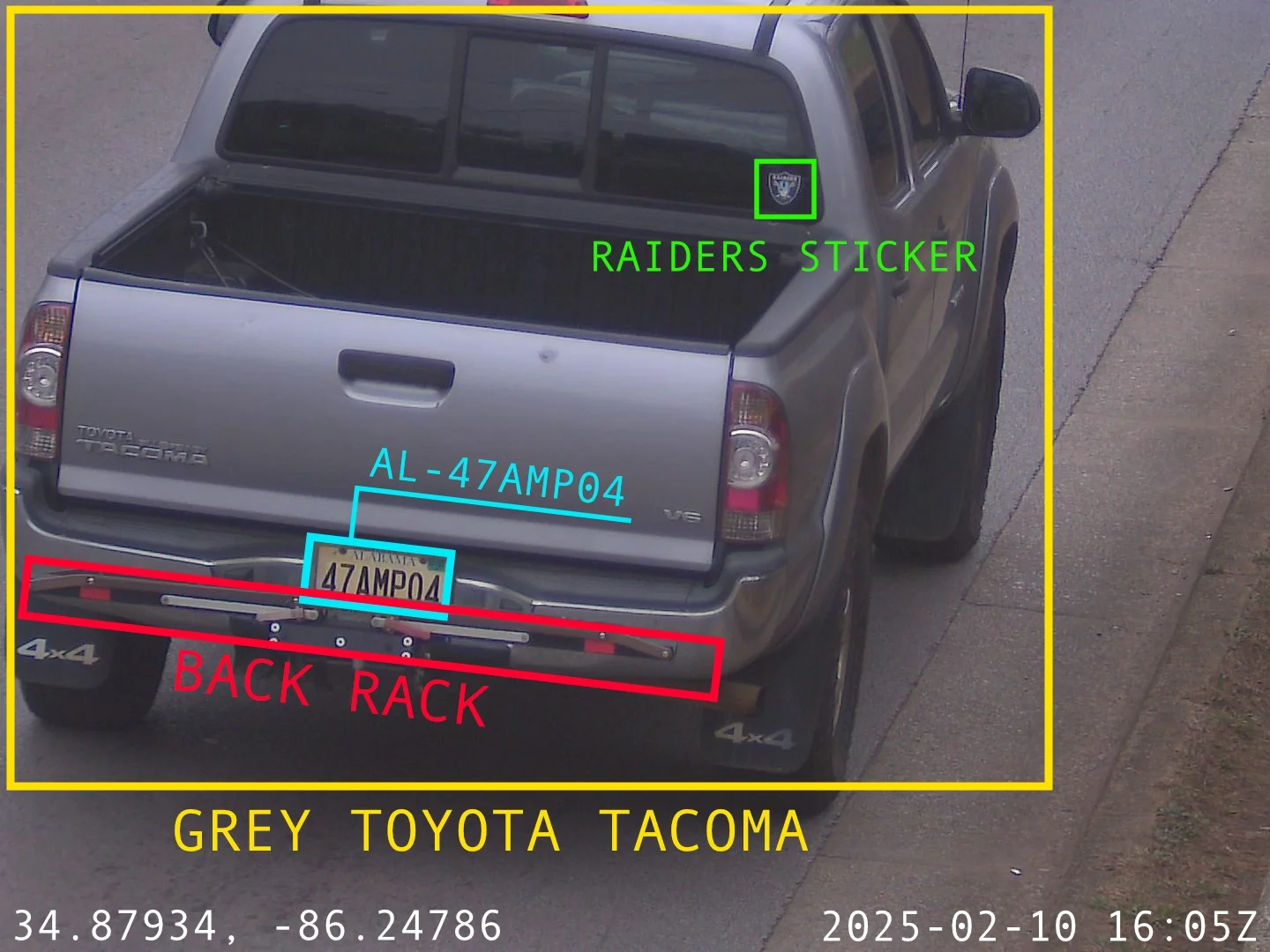
There are numerous reasons why University City must join communities all around the nation to remove Flock cameras from our streets. From ICE data sharing concerns to people mistakenly held at gunpoint, these cameras represent a fundamental shift in how we protect public safety in our community.
Topics on this Page
Click a button to scroll down to that topic on the page.
Recent investigative reporting and public records requests have revealed that ICE and federal immigration authorities have gained access to Flock data through multiple means, despite the company's initial claims to the contrary.
More than 4,000 searches of Flock databases have been conducted by state and local law enforcement agencies on behalf of federal immigration authorities, giving ICE "side-door access" to a tool for which it does not have a formal contract.
San Francisco Police Department allowed out-of-state police to make over 1.6 million searches of its Flock database, with searches explicitly marked as ICE-related, in direct violation of California state law.
Virginia's Flock Safety network was searched nearly 3,000 times over a 12-month period using terms like 'ICE,' 'ERO,' 'immigration,' and 'deportee.'
Denver's Flock cameras were accessed for ICE-related searches beginning June 13, 2024, with searches conducted by out-of-state agencies from Texas, Oklahoma, Arizona, Kansas, Arkansas, Alabama, and Florida.
This issue is of particular concern to University City, as municipalities, counties, and other agencies with 287(g) agreements with ICE continue to spring up in our direct vicinity. This includes police departments in Hillsdale, Breckenridge Hills, Woodson Terrace, St. Ann, Country Club Hills, Jefferson County, St. Charles County, and Missouri Highway Patrol.
Data-sharing with ICE
Flock Cameras are easily hacked
Benn Jordan demonstrates how easily Flock cameras can be compromised to steal data and track people’s locations. The video highlights significant security vulnerabilities discovered in the hardware and software, calling into question the privacy claims made by the company.
Abuses & Misuses
Flock cameras have a number of instances of serious and documented misuse and abuse, including stalking and spying on kids. These real-life cases show how surveillance tools marketed for “public safety” can become tools of harassment.
Stalking
Flock cameras have been misused by police to stalk ex-partners, like when a Kansas police chief used Flock cameras 228 times to stalk an ex-girlfriend and her new partner without cause. According to The Wichita Eagle, Nygaard was sentenced to 18 months of probation and lost his police certification, but won't face any charges.
In a similar case, Kechi Police Lieutenant Victor Heiar was arrested by the Wichita Police Department after it was discovered he utilized his role as a police officer to unlawfully access Flock cameras to track down where his estranged wife was located.
Police chief Jay Johnson of Greenfield, WI faced felony misconduct charges after ordering the installation of a department-owned surveillance camera outside his personal home while in the middle of a divorce with his wife. Johnson allegedly told one of his employees to keep the installation “low key,” as Johnson had already been told not to install the camera by the city’s attorney.
These are just a few of the troubling examples where police have misused these powerful tools to track and stalk people for their own personal agenda. Unaccountable police surveillance, powered by an industry selling privacy-killing tools, creates a dangerous environment that puts people (especially women) at heightened risk.
Spying on Children
In 2025, after it was revealed that 60 of Flock’s AI-powered surveillance cameras were accessible to the public online, it was noted that several of the live images left exposed were footage of unattended children at a playground.
In his April 2026 article on Substack, Why Are Flock Employees Watching Our Children?, Jason Hunyar reviewed Flock logs that revealed Flock’s own employees had been reviewing live and recorded footage of children’s gymnastics centers, fitness studios, libraries, schools, playgrounds, and private pools. Flock has always stated that they will never “share, sell, or access” the data their cameras collect, swearing that the only people who have access are the contracted partners.
Hunyar’s review of Flock’s logs tell a very different and creepy story with Flock’s own Randy Gluck accessing the camera 54 times and Bob Carter accessing the logs 185 times. This raises significant questions as to why Flock employees have violated their own terms of service, but also why they have primarily access camera locations where children are present.
Manufactured Probable Cause
Surveillance technology has created a dangerous paradigm where law enforcement can circumvent constitutional protections by using automated systems to track citizens and then inventing justifications after the fact. This "reverse surveillance" approach—where monitoring comes first and legal justification is manufactured later—fundamentally erodes the Fourth Amendment's guarantee that probable cause must precede any search or seizure.
A review of hotlist data in Houston, Texas uncovered exactly this abuse. Investigator James Dancer created a hotlist entry on July 3, 2024, for a Texas plate ending in –981, case number 2407-00085, with a one-month expiry of August 2, 2024.
The vehicle was allegedly stolen 12 years ago, according to a claim by the registered owner. Another agency, Colorado County, had already declined to enter it as stolen, possibly because the statute of limitations expired seven years earlier in 2017.
Colorado County already decided there was no criminal case here and yet Dancer’s entry instructs his peers to manufacture a justification for a stop (“Find PC”) and seize the vehicle anyway. That outcome (“Do not release vehicle”) is predetermined in the hotlist entry. Once the vehicle is seized, civil forfeiture requires only a “preponderance of the evidence” that the vehicle is connected to criminal activity.
“Vehicle is not listed as stolen in NCIC/TCIC. Registered owner claims vehicle was stolen out of Colorado County in 2012. Colorado County refused to enter vehicle as stolen. Find PC and stop/identify all occupants… Vehicle will be seized for a Civil Seizure hearing. Do not release vehicle.”
This pattern appears 47 times across 800 entries, often using templates like "BMV Susp Vehicle- BLK FORD BRONCO-Develop PC, Stop and ID Occupants." These instructions systematically invert the Fourth Amendment, requiring officers to first locate vehicles through automated surveillance, then find legal pretext afterward, turning constitutional protections into technicalities while lining agency budgets through forfeiture proceeds.
Mistaken Identity due to camera error
ALPR technology has created a public safety crisis, turning ordinary people into victims of violent police encounters based on technological errors that have repeatedly created situations of public endangerment. These are just a few of the most prominent cases documented in the media.
2020 – Aurora, Colorado
In 2020, a mother and her family, including her 6-year-old daughter, were pulled over at gunpoint in Aurora, Colorado and forced to lie face down on hot pavement. Police mistakenly flagged their Colorado license plate as matching that of a completely different vehicle from a different state: a stolen motorcycle registered in Montana. The incident, captured on video and widely condemned, led to a $1.9 million settlement from the city in 2024.
2024 – Toledo, Ohio
In April 2024, Brandon Upchurch was a casualty of Flock’s system when he was mistakenly accused of driving a vehicle with stolen license plates when a camera made by Flock misread the "7" on Upchurch's plate for a "2" and pinged Toledo Police.
During the encounter, Toledo police demanded that Upchurch get on the ground and, as he did so, released a police dog who then latched onto Upchurch's dreadlocks, rammed his head into the ground, and sunk its teeth into his arm. While Upchurch was taken into custody, all charges were later dropped.
2025 – Columbine Valley, Colorado
In September of 2025, police Sergeant Jamie Milliman showed up at the door of Chrisanna Elser to wrongfully accuse her of stealing packages off someone’s porch in nearby Bow Mar. Elser was rightfully shocked and, despite her insistance that there was a mistake, she was told by Milliman, “It is on camera many times. You’ve been served a summons … I will bring all of my evidence, the many, many, many, many videos, and you can bring yours. And if a judge says you didn’t do it then you didn’t do it.”
Later in the conversation, Sgt Milliman accused Elser of lying about her innocence, saying, “I have been doing this for 27 years. I have probable cause because I saw you. You can laugh and giggle all you want, but I have video of you. This is going nowhere because you’re not being truthful with me. The day after, Milliman refused to look at Elser’s evidence.
Chrisanna Elser was later cleared of all charges and Sgtt Milliman was disciplined with “extra training” after the incident, receiving a reprimand letter which noted that he exhibited “rude behavior,” and that his actions were “unprofessional and inconsistent with the standards expected of a sworn officer.”
2026 – Sherwood, Arkansas
A recent incident took place in February 2026, where a mother and her family were stopped and held at gunpoint in Arkansas after an ALPR mistakenly flagged her vehicle as stolen. In the recording of the incident, the officer explains to the owner of the vehicle that the issue was an issue with a mistaken reading of her license plate. He later places blame on the woman and her license plate frame for being the cause of the stop, rather than the ALPR or his failure to verify the plate.
These are a few in at least a dozen instances where misreads by Flock's automated license plate readers, or a lack of verification by officers, resulted in people being held at gunpoint, sent to jail, or mauled by a police dog, among other outcomes.
violation of Constitutional right to Privacy
The Fourth Amendment's “reasonable" standard establishes that government surveillance must comport with society's expectations of privacy, and Flock Safety's ALPR technology raises significant concerns under this framework.
Under the established precedent from Katz v. United States, individuals possess a reasonable expectation of privacy in their movements and associations, yet Flock's cameras systematically track and record the precise location, date, and time of every license plate they encounter without individualized suspicion.
This creates a detailed "mosaic" of people's daily lives, where even if individual car sightings might not be considered private, the comprehensive aggregation of this data reveals intimate patterns about religious practices, political associations, medical visits, and personal relationships; information that the Supreme Court has recognized deserves Fourth Amendment protection in cases like Carpenter v. United States. It was in this 2018 decision, the Court said "A person does not surrender all Fourth Amendment protection by venturing into the public sphere."
The pervasive nature of Flock's surveillance, combined with its data-sharing vulnerabilities related to ICE 287(g) programs, transforms passive observation into an investigative dragnet that fundamentally undermines the reasonable expectation of privacy that the Fourth Amendment was designed to safeguard, particularly when the collected data is used to identify and target vulnerable populations without adequate judicial oversight.
Beyond immigration enforcement specifically, the Flock system presents fundamental due process and oversight problems. Many local agencies using Flock were completely unaware that federal authorities were accessing their data and some agencies never ran network audits or did not know how to access them.
When local law enforcement conducts a Flock search, they can access not only their own cameras but also cameras in other states and even nationwide, creating a surveillance network far beyond what local officials authorized. A Washington state court ruled in November 2025 that Flock camera images are public records that can be requested by anyone, raising additional privacy concerns about who ultimately has access to this data. The system’s audit logs have proven inadequate for oversight, as demonstrated by the millions of unauthorized searches that occurred before being discovered through independent journalism and public records requests.
DUE PROCESS VIOLATIONS
Flock cameras present fundamental due process and oversight problems. Many local agencies using Flock were completely unaware that federal authorities were accessing their data and some agencies never ran network audits or did not know how to access them.
When local law enforcement conducts a Flock search, they can access not only their own cameras but also cameras in other states and even nationwide, creating a surveillance network far beyond what local officials authorized. A Washington state court ruled in November 2025 that Flock camera images are public records that can be requested by anyone, raising additional privacy concerns about who ultimately has access to this data. The system’s audit logs have proven inadequate for oversight, as demonstrated by the millions of unauthorized searches that occurred before being discovered through independent journalism and public records requests.
Tell City Council we want Safety, not Surveillance
If you are ready to take action, sign the petition below and add your name to the growing list of neighbors who are telling U City Council “We want safety, not surveillance in our community!”